Few places shaped the course of Christianity more than Ephesus. The Apostle Paul spent over two years preaching here, the Council of Ephesus proclaimed Mary as "Theotokos" (God-bearer) in 431 CE, and the city is the first of the Seven Churches addressed in the Book of Revelation. For Christian travelers, Ephesus is not just an archaeological site -- it is holy ground.
Paul's Ministry in Ephesus (c. 52-55 CE)
The Apostle Paul arrived in Ephesus around 52 CE and stayed for over two years -- one of his longest recorded stays in any city. Ephesus was the capital of the Roman province of Asia and one of the largest cities in the empire, making it a strategic base for spreading the Christian message throughout the region.
Paul's preaching was effective. Acts 19 records that "all the residents of Asia heard the word of the Lord, both Jews and Greeks." His success, however, put him on a collision course with the city's powerful artisan class.
The Silversmiths' Riot
The confrontation came to a head around 57 CE. Demetrius, a silversmith who crafted miniature shrines of Artemis, saw his livelihood threatened by Paul's message that "gods made with hands are not gods." He rallied his fellow craftsmen, and the protest quickly escalated.
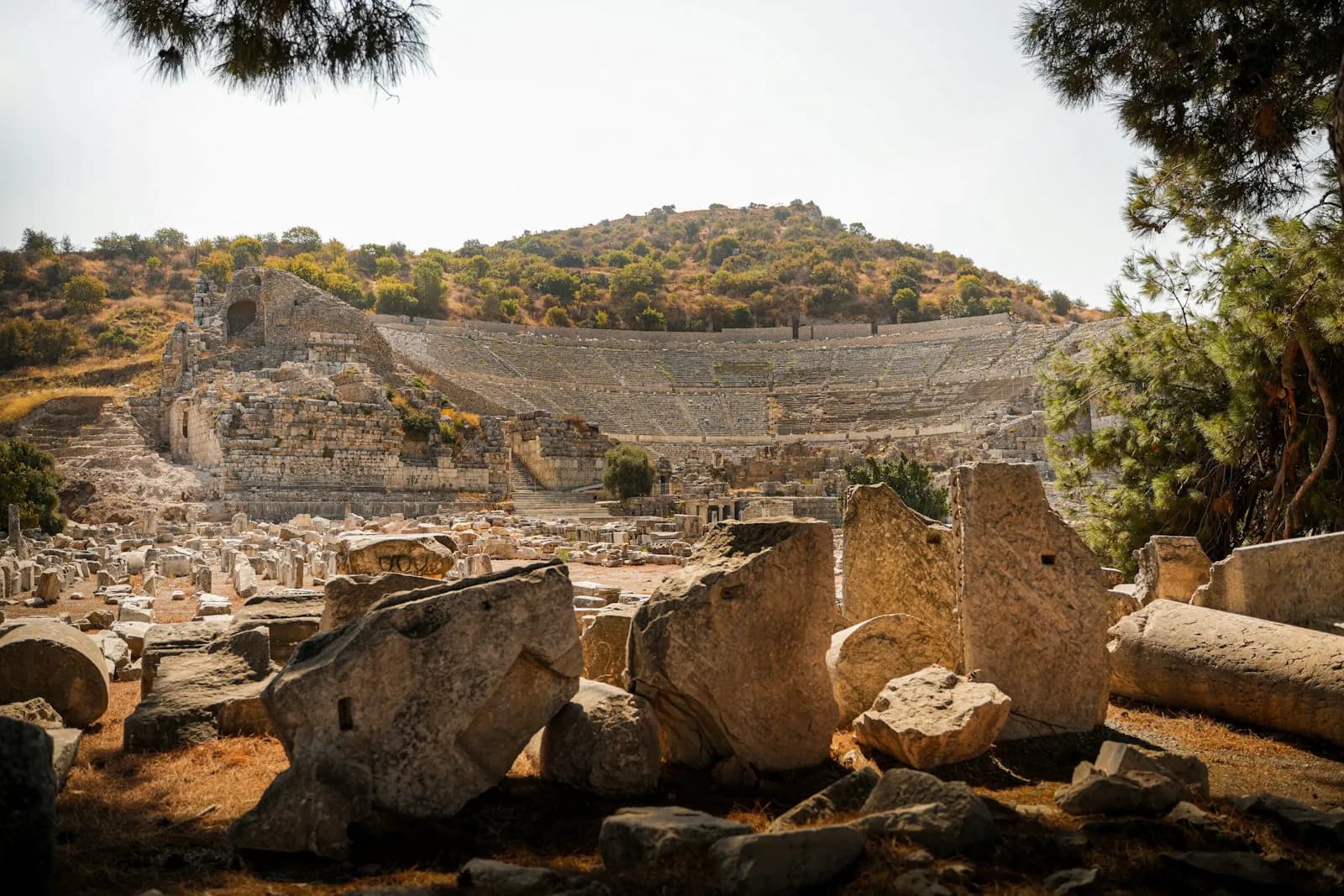
A mob surged into the Great Theatre -- the massive 25,000-seat amphitheatre that still dominates the Ephesus landscape. For two hours, the crowd chanted "Great is Artemis of the Ephesians!" Paul wanted to address the crowd, but his companions physically restrained him. The city clerk eventually dispersed the mob, warning that Rome would not tolerate civil unrest.
The riot reveals Ephesus at a turning point. The old world of pagan worship and its economic ecosystem was being challenged by a new faith. The Theatre where this drama unfolded still stands, and walking through it today, you can imagine the roar of the crowd echoing off the marble seats.
The Letter to the Ephesians
Paul's connection to the city extended beyond his physical presence. The Letter to the Ephesians -- one of the New Testament epistles -- is addressed to this community. Its themes of unity, spiritual armor, and the "household of God" resonated with a community living in a cosmopolitan city where dozens of religions competed for adherents.
The Council of Ephesus (431 CE)
Nearly four centuries after Paul, Ephesus hosted one of the most consequential gatherings in Christian history. The Council of Ephesus, convened in 431 CE in the Church of Mary (whose ruins stand within the archaeological site), addressed a heated theological question: What was the precise nature of the Virgin Mary's role?
The Council proclaimed Mary as "Theotokos" -- Greek for "God-bearer" or "Mother of God." This was not merely an honorific. It was a doctrinal statement about the nature of Christ himself, affirming that the divine and human natures were united from the moment of conception.
The declaration permanently shaped Christian theology and elevated Marian veneration to a central place in the faith. That this proclamation happened in Ephesus -- the ancient city of the Mother Goddess Artemis -- is one of history's most remarkable continuities. The city that had worshipped a divine feminine figure for millennia simply transformed the object of that devotion.
One of the Seven Churches of Revelation
Ephesus holds another distinction in biblical history: it is the first of the Seven Churches of Asia addressed in the Book of Revelation. The message to the church at Ephesus (Revelation 2:1-7) praises the community's endurance and discernment but warns: "You have abandoned the love you had at first."
For Christian pilgrims tracing the Seven Churches circuit across western Turkey, Ephesus is the essential starting point -- and the most archaeologically complete of the seven sites.
The House of the Virgin Mary
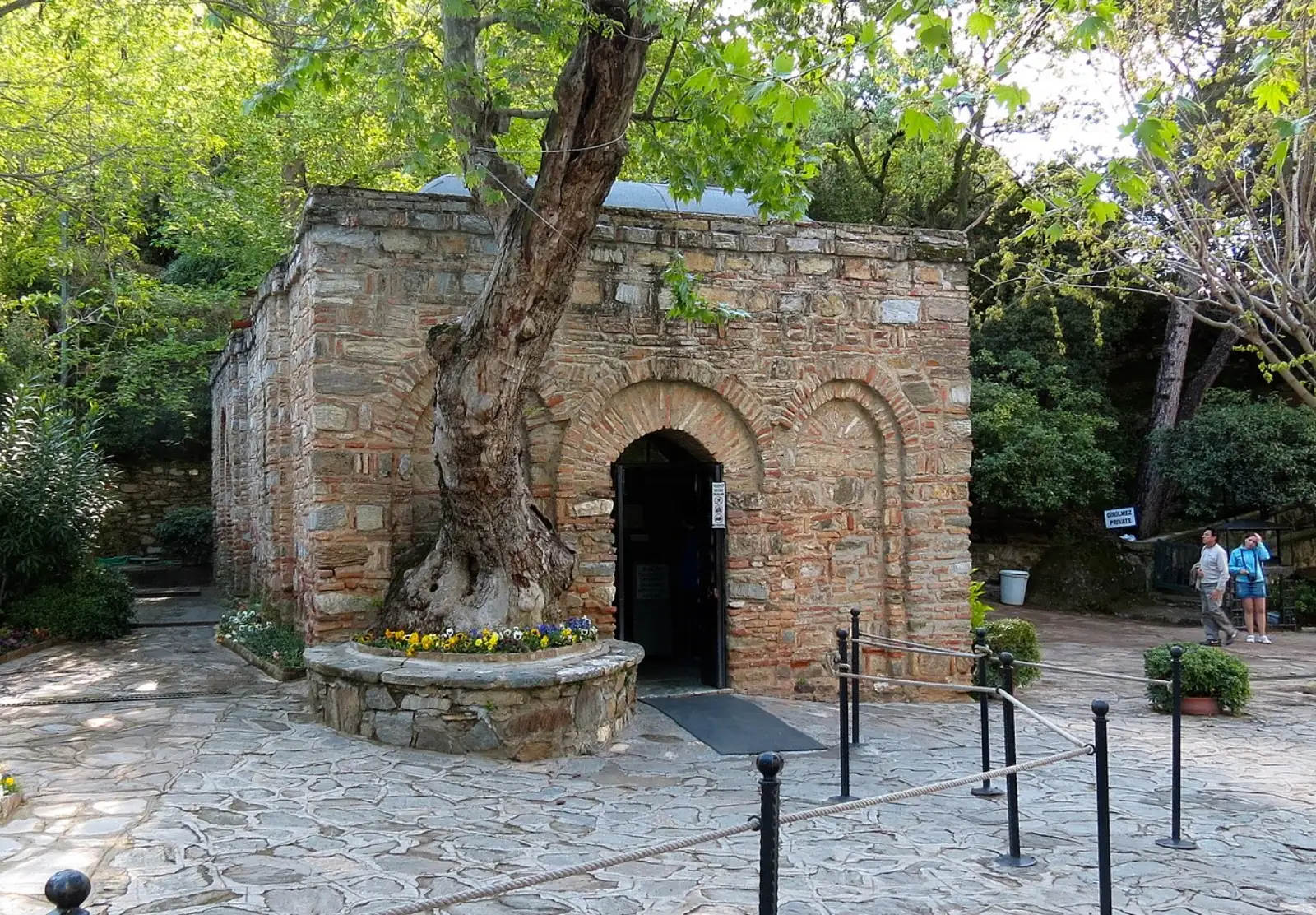
Seven kilometers from the Ephesus ruins, on the forested slopes of Bulbul Mountain, stands a small stone chapel that tradition identifies as the last home of the Virgin Mary.
The story of its discovery is extraordinary. In 1881, French priest Julien Gouyet traveled to the area based on the detailed visions of Anne Catherine Emmerich, a German nun who had never visited Turkey. Emmerich's descriptions were so precise that Gouyet located the foundations. The site was rediscovered in 1891, sparking formal investigation.
Pope Leo XIII recognized it as an official pilgrimage site in 1896. Since then, three popes have visited: Paul VI (1967), John Paul II (1979), and Benedict XVI (2006).
An interfaith site: The House of the Virgin Mary holds special significance beyond Christianity. Mary (Maryam) is mentioned 34 times by name in the Quran across 32 verses, making the house a place of interfaith reverence. Muslim visitors come to pray alongside Christian pilgrims -- a quiet testimony to shared devotion.
Visiting today: The House of the Virgin Mary is located 7 km from the main Ephesus site. Admission is approximately 500-700 TRY. Modest dress is required (shoulders and knees covered). Sunday Mass is celebrated at 10:30 AM in English. No interior photography is permitted.
The Basilica of St. John
On Ayasuluk Hill in Selcuk, the ruins of the Basilica of St. John mark the believed burial site of St. John the Apostle. Emperor Justinian I built the basilica between 548 and 565 CE -- a massive cruciform structure that, if fully reconstructed, would rank among the largest churches in the world.
John's connection to Ephesus runs deep. Tradition holds that he brought the Virgin Mary to Ephesus after the crucifixion and spent his final years here, writing the Gospel of John. His rebuilt tomb lies within the basilica ruins.
The basilica is a separate site from the main Ephesus ruins. Admission is EUR 6, or it is included in the EUR 65 full combo ticket.
The Cave of the Seven Sleepers
Two kilometers from the Ephesus ruins lies the Cave of the Seven Sleepers. According to legend, during Emperor Decius's persecution of Christians around 250 CE, seven young men hid in this cave and fell into a miraculous sleep lasting roughly 200 years. They awoke to find the Roman Empire had become Christian.
The story appears in the Quran (Surah 18, "The Cave"), making this site sacred to Muslims as well as Christians. The cave is free to visit and takes about 20 minutes -- a peaceful, atmospheric detour from the main ruins.
A Spiritual Journey Through Ephesus
What makes Ephesus unique among ancient sites is the unbroken thread of spiritual devotion that runs through its history. From the Anatolian mother goddess Cybele, to the Greek Artemis whose temple was a Wonder of the World, to the Virgin Mary proclaimed Theotokos in this very city -- Ephesus has been sacred ground for over three millennia.
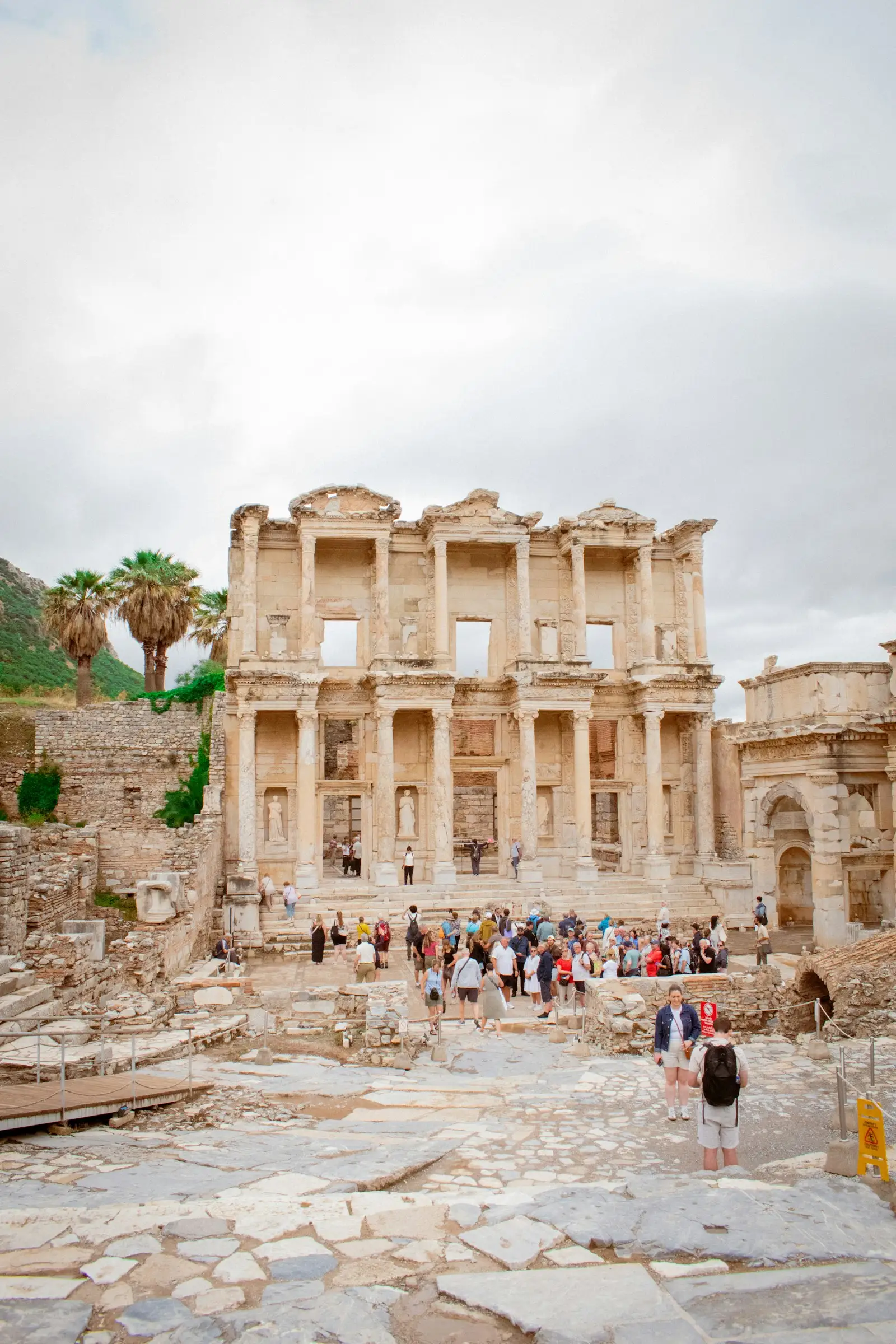
Walking through the ruins today, you pass through layers of belief. The theatre where crowds chanted for Artemis. The church where Mary was declared Mother of God. The streets where Paul preached a revolutionary message. Each stone carries the weight of that history.
Whether you come as a pilgrim, a historian, or simply a curious traveler, Ephesus offers a spiritual depth that few archaeological sites anywhere in the world can match.